We Did It!

21 12 2011

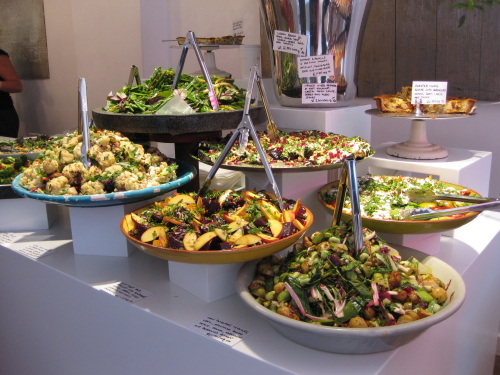
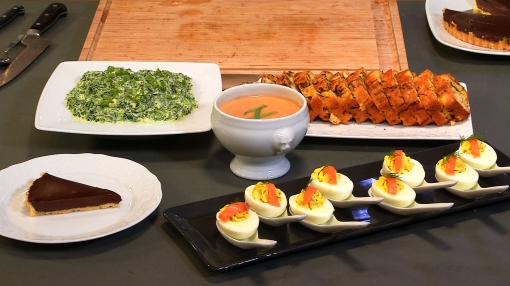
First service!

Keep up with Blend Hamburgers on Facebook.

Grand opening coming up in January 2012.  Hope to see you there!

Now, happy Solstice to all, and to all a good night.

Originally published on Croque-Camille.


On Yeast and Starter

7 12 2011

In every family and group of friends, I believe there is one person everyone else turns to when they have questions about food and cooking.  In my circles, that person is often me.  I love fielding such questions and recipe requests – I take it as a supreme compliment and it feels good to know that my friends and family (and even some strangers, via the blog) have confidence that I will be able to help them out in the kitchen.  It’s also a great excuse to have a chat with people I might not communicate with as much as I’d like.  By way of food questions, I also get news of babies becoming children, moves and new houses, and all sorts of other small talk that I miss having with faraway friends.  So I’m grateful and humbled to be your friendly neighborhood (or not) food guru.

One such question I received recently involved yeast:

I made some fresh bread recently, and I was very pleased with the result. However, I was a little put out by the buck fifty I had to drop on a tiny cube of Flieschman’s active yeast. I know that you can keep yeast cultures living for an extended period of time. do you have any techniques to share with me on that? Is it possible to keep a culture in a mason jar in the back of my fridge and take from it when I want to bake a loaf of bread? Seems like it would be a lot simpler, and would require less planning than a trip to the store each time I want to bake a loaf.

Yeast is such a multifaceted topic, a primer seemed to be in order.

Read the rest of this entry »


Beer Hall Eating in Köln

28 11 2011

A couple of weekends ago, Nick and I found ourselves in Cologne, Germany (Köln to the natives) for a concert.  Thanks to the Thalys high-speed train network, the trip from Paris was a short three hours, allowing us to spend the better part of two days eating and drinking our way through the city’s many beer halls.  We arrived in time for lunch, and after finding our hotel, headed straight for the Päffgen Hausbrauerei.

Paffgen brewery

The beers (Kölsch, and Kölsch alone) are brought around on deep trays with slots to hold the narrow glasses. The waiter keeps a tally of how many you’ve ordered on your coaster.

sauerbraten & potato dumplings

I had sauerbraten, a dish of braised beef in a sweet-and-sour sauce traditionally thickened with ground gingersnaps.  It came with potato dumplings and applesauce.  Classic.

bratwurst

Nick ordered the bratwurst, sold in lengths of three-quarters of a meter.  It was served with a tiny tureen of spicy mustard.

Read the rest of this entry »


Super Natural Every Day

15 11 2011

…Or most of them, anyway.

I was delighted to receive the news, several weeks ago, that I had won a copy of Super Natural Every Day from The Kitchen Illiterate.  Since receiving the book, I’ve been cooking from it quite a bit, as well as finding myself inspired by it while doing my food shopping.  (“Yellow split peas?  I think there are a couple of recipes for those in that new book!” “I should probably be keeping quinoa and bulghur on hand…” “How could we possibly be out of miso?  To the Japanese store, posthaste!” Sometimes I talk to myself in an old-timey fashion.)

I’ve made mention of the book a few times on Seasonal Market Menus, my other blog devoted to CSA eating and menu planning, because the recipes are great for using whatever vegetables you happen to have around, given a few pantry staples.  I certainly haven’t followed any of the recipes to the letter, but that doesn’t stop them from being a fantastic source of inspiration.  Like this soda bread:

soda bread from Super Natural Every Day

I’d never really considered soda bread as a legitimate thing before, but Heidi’s photos convinced me to give it a try.  I substituted leftover pickle brine for half of the buttermilk in the recipe, to no ill effect.  The dough was delightfully springy, and any rye bread that doesn’t insist on caraway is a good thing in my book.  It baked up nice and crusty, with a slightly biscuity or scone-like texture in the crumb.  The bread resisted staling longer than a yeast bread would, which is good because the loaf was huge.  We ate it for almost a week, and then I took the remaining half and turned it into some of the crunchiest croutons I’ve ever made.

Read the rest of this entry »


An Ice Cream Dessert for Fall

11 11 2011

photo by Nick

Treacle toffee ice cream, spiced hot toddy poached pear, speculoos.

The ice cream comes from Beyond Nose to Tail, and I’ve been wanting to make it since getting the book two and a half years ago.  The pear, poached in what basically amounted to a hot toddy (in part because I ran out of sugar – here’s to happy accidents) with whole cinnamon, allspice, clove, black pepper, and star anise, makes a marvelous accompaniment.  And who doesn’t love a crisp speculoos cookie?

On this day in 2010: Céleri Remoulade (a narrative recipe)


Masaledar Chholay

5 11 2011

Or, Chickpeas in Spicy Tomato Gravy.  Yes, folks, it’s the first weekend of the month, which means it’s Currypalooza time!  I got to choose again this time around, and I picked this recipe, from a feature in Food and Wine about Sanjeev Kapoor.

masaledar chholay

Masaledar Chholay is a Punjabi dish, from a cuisine which I am beginning to learn tends to contain a paste of blended garlic, ginger, and chilis.  (Sorry, that sentence was terrible.  I’m a little burned out at the moment.  The new job is great so far, but much more mentally taxing than the old one.)  It’s a simple dish to put together, and comes largely from pantry staples: canned chickpeas and tomatoes, fresh onions, ginger, garlic, chilis, and cilantro, and a handful of not-very-exotic spices.  Cooking it up, Nick and I both agreed that the flavor was a little flat.  A squeeze of lime juice set things right.

Chickpeas in spicy tomato gravy, spinach simmered in yogurt, kolmino patio, rice

I served it with yogurt-simmered spinach (sort of a cheater’s saag paneer), kolmino patio (yet another hit from Miss Masala - spicy sweet-and-sour shrimp), and basmati rice.  The most colorful place settings possible completed the scene.

To see a couple more takes on the dish, check out the other Currypalooza posts at more please by Margie and Sage Trifle.

And with that, I wish you a great weekend!

Originally published on Croque-Camille.


Valençay

1 11 2011

Valençay

Valençay is one of my favorite goat cheeses.  I picked up a gorgeous one at the market last weekend, and when Nick decided to take some lovely photos of it, I realized it was high time I gave this flat-topped pyramid a moment in the spotlight.

This cheese, which is named for the Loire Valley town in which it is produced, earned AOC status in 1998, making Valençay the first place in France to have AOCs for both their wine and their cheese.  Legend has it that Napoleon, upon returning from a particularly unsuccessful business trip to Egypt, stopped at the château in Valençay and flew into a rage upon seeing the local cheese in the shape of a pyramid.  He lopped off the top with his sword, thus giving the cheese its current signature shape.

Stories aside, Valençay is made using only raw goat’s milk.  It’s rubbed with salted ashes and left to mature for about 3 weeks, during which time a thin, bloomy gray rind develops.  Just underneath the mellow, earthy rind lies the firm yet creamy interior.  It has a pleasant citrusy tang, and is only mildly goaty.  Even though it may look intimidating to cheese newbies (I myself used to shy away from ashed or ashy-looking cheeses), Valençay is not at all challenging.  Which is not to say that die-hard cheese lovers don’t appreciate it.  On the contrary, I think this is one that just about anyone can enjoy.

I bought this particular cheese from the very friendly proprietor of La Ferme de la Prairie (known in some circles as the UCG – Ultimate Cheese Guy), who sells only goat cheeses, and for very reasonable prices.  While a typical Valençay might cost 7 or 8 euros, his comes in at 5 and change.  He also provides samples of several of his cheeses, with a liberal tasting policy – knives and cheeses are placed on top of the counter, it’s up to you to cut your own tastes.  He’ll ask how aged or fresh you’d like your cheese, and if you’re not sure, he’s happy to give his opinion.  A visit to his stand is a must if I’m at the Grenelle market on Sunday morning.

On this day in 2010: Chartres

Originally published on Croque-Camille.


Apple-Goat Cheese Quickbread

27 10 2011

A play in one act

Scene 1: Sunday evening, 5:00 pm.  Nick and Camille return home after a much-longer-than-anticipated outing.  Nick is carrying a baguette.

Snoopy: Mew!

Nick: Hey, Snoopy. (Goes to the kitchen to set down the bread and pour glasses of water.)

Camille: Hi kitty! Did you miss us?

Snoopy: Mew!  (Runs away to the living room, where she lies down on the floor.)

Camille: Oh, you need to be petted. (Kneels down and pets the cat.)

Nick: Did you have a hard day, Snoopy?

Camille (Looking at clock): Holy crap, is it five already?  How long was that bike ride?  Three hours?

Nick:  I guess so.

Camille: Damn!  I know I planned on writing a blog post, but now I don’t feel like writing anything.  I want to bake a cake!  And make chicken stock.  That just feels more important right now.

Nick: Go for it.  Do what makes you happy.  I’m not going to complain about any of that.

Camille: I saw this recipe for apple-cream cheese bread on emiglia’s blog.  And we need to use up some of these apples.

Nick: Who?

Camille: You know, we went on the hike and picnic?  And it rained?

Nick: Right.

Camille: Anyway, we don’t have any cream cheese, so I’m going to use the rest of that goat cheese in the fridge.

Nick: Fine, and if you want to write about it…

Camille: I’m not going to write about it, I’m just making her recipe with one little change.

Read the rest of this entry »


Maman’s Homesick Pie

24 10 2011

One of the perks of writing a blog is that occasionally, you get offers to receive review copies of books.  Generally these books have topics related to those of the blog, and writing a review is optional, but considering that a) free book! and b) free post topic!, it’s really a win-win situation.

Out this month, Maman’s Homesick Pie: A Persian Heart in an American Kitchen, is a delightful read.  The author, Donia Bijan, was chef at Palo Alto’s L’Amie Donia for ten years.  Before that, she studied at Le Cordon Bleu in Paris (under the same directrice as Julia Child!), gaining an internship at Fauchon and stagiare work at several of France’s starred restaurants.

Maman's Homesick Pie

The book outlines her journey from childhood in pre-revolutionary Iran to exile in the United States to France and finally making a home in the Bay Area.  Bijan’s mother, who sounds like an incredible woman, supports her daughter through the trials and tribulations of leaving loved ones, moving to new countries, and learning to cook.  The storytelling is warm and sympathetic.  Best of all, the recipes sprinkled throughout – two per chapter – are mouthwatering and make sense in the context of the story.  One of my pet peeves with these food memoirs that seem to be popping up everywhere these days is that the recipes feel like they’re just plopped in there with no rhyme or reason.  That is not the case with Maman’s Homesick Pie.  Each one belongs, from the simple childhood memories of Cardamom Tea, Pomegranate Granita, and Saffron Yogurt Rice with Chicken and eggplant to dutifully practiced French classics such as Duck à l’Orange, Ratatouille, and Rabbit with Mustard.

Read the rest of this entry »


On Spice Blends

16 10 2011

Spice blends.  Simply put, I don’t use them.  I much prefer to make my own combinations instead of relying on commercial blends for chili, curry, pie, and so on.

My spice rack

Here are my spice racks.  They hold, in theory, the spices I use most often.  I also have two 2-liter size plastic bins in my pantry, both of them stuffed with esoteric spices.  And then there’s half a shelf of jars, too, filled with spices bought in bulk at Asian, Indian, and Latin shops.  I’m not saying you need to devote as much of your precious kitchen space to spice storage as I do – for one thing, if I had a spice grinder I could stop keeping stuff like cinnamon and coriander in both whole and powdered form – but it’s worth stocking a few basic spices, which can then be combined in any number of ways.

This post is inspired by a good friend of mine who recently spent the better part of the day scouring American stores in Paris in hopes of finding a jar of McCormick’s chili powder.  (They do make chili powder in France, but too often it inexplicably contains curry spices, which is just plain weird.)  I tried to convince her that spicing chili was not all that complicated given ground chilis, cumin, and some fresh garlic, but she remained unsure.  It got me to thinking that I really don’t buy pre-blended spices at all  (I make an exception for garam masala, though when my current stash runs out, I probably won’t buy more, instead mixing up my own), and haven’t for quite some time.

I’ve always been fascinated with spices.  As a child, I used to peruse the row of Spice Islands jars my parents kept lined up on the kitchen counter, imagining the myriad of magical flavor combinations within.  When I started cooking a little for myself (mostly eggs and ramen, often together) I would pick and choose my favorites to add to my concoctions, in hopes that I might discover some heretofore unknown deliciousness.  Doubtless I killed more than one plate of scrambled eggs with one too many dashes of Old Hickory Smoked Salt, but I did learn that thyme and eggs were wonderful together.  That seasoning the ramen broth myself with soy sauce and garlic powder was way better than that mystery spice packet.  That if you’re cooking taco meat, and you’re out of taco seasoning, you can read the ingredients on the burrito seasoning (which you obviously can’t use directly, because it was for burritos) and approximate what might be in that taco seasoning.

My comfort level with individual spices, then, has been a long process.  I don’t expect everyone to be able to do it overnight, so here are a few guidelines for some common spice blends.  I’ll list the ingredients from most to least prominent, and leave it up to you to determine which ratios work best for you.  I also recommend, instead of mixing the spices first and adding them all at once, to add each spice to the dish individually and taste as you go.  If you’re the meticulous type, you can keep detailed notes of what you’ve added, or take the more organic route, winging it as you go.  And don’t forget the salt.

Chili Powder: ground chilis (I tend to keep several varieties around, and use them in combination), fresh chilis, fresh garlic or garlic powder, ground cumin, dried oregano or thyme.  Optional: cinnamon, epazote, cloves, cocoa powder.

Curry Powder: (the big ones): ground turmeric, black and white pepper, cardamom, cumin, coriander seed, cinnamon, ground or fresh ginger; (use in lesser quantities): cloves, cayenne, mace or nutmeg, fennel seed, bay leaf, fenugreek, mustard seeds, asafoetida.

Apple Pie Spice: ground cinnamon, nutmeg, ground ginger, ground cloves, maybe allspice.

Pumpkin Pie Spice: ground cinnamon, ground ginger, nutmeg, ground cloves.  Optional: allspice, black pepper.

Pickling Spice: (use whole) mustard seed, coriander seed, chili flake, fresh garlic, bay leaf, fresh dill or parsley.

Mulling Spices: (for cider or wine, use whole) cinnamon, cloves, allspice, star anise, orange peel, black peppercorns.

Old Bay Seasoning: celery seed, paprika, black pepper, cayenne, bay leaf, mustard powder, ground allspice, ground mace.

Seasoned Salt: (in addition to the salt) fresh garlic or garlic powder, celery seed, onion powder (or just put onions in whatever you’re cooking), paprika, white pepper, turmeric.

Lemon Pepper: (this one should be obvious) lemon zest, black pepper.

Whole spices, toasted and then ground, will offer the biggest flavor, but pre-ground are fine, too (except for nutmeg, which you should always grate fresh).

If I’ve left out your favorite spice blend, let me know in the comments, and I’ll do my best to help you out.

On this day in 2010: Worthwhile French Beers: Val’Aisne Blonde

Originally published on Croque-Camille.


Follow

Get every new post delivered to your Inbox.

Join 169 other followers